The Ultimate Comparison: 3D Explainers vs. Live Action for Complex ...
Introduction
Ever tried explaining a cutting-edge tech concept, only to watch your audience’s eyes glaze over? You’re not alone. In 2026, content creators, YouTubers, and video producers face a big decision: Should you use a 3D explainer or live action video to break down complex technology? Both formats have unique strengths, but choosing the right one can make or break your message. Let’s dive into a side-by-side comparison to help you pick the perfect style for your next project.
3D Explainers: Bringing the Invisible to Life
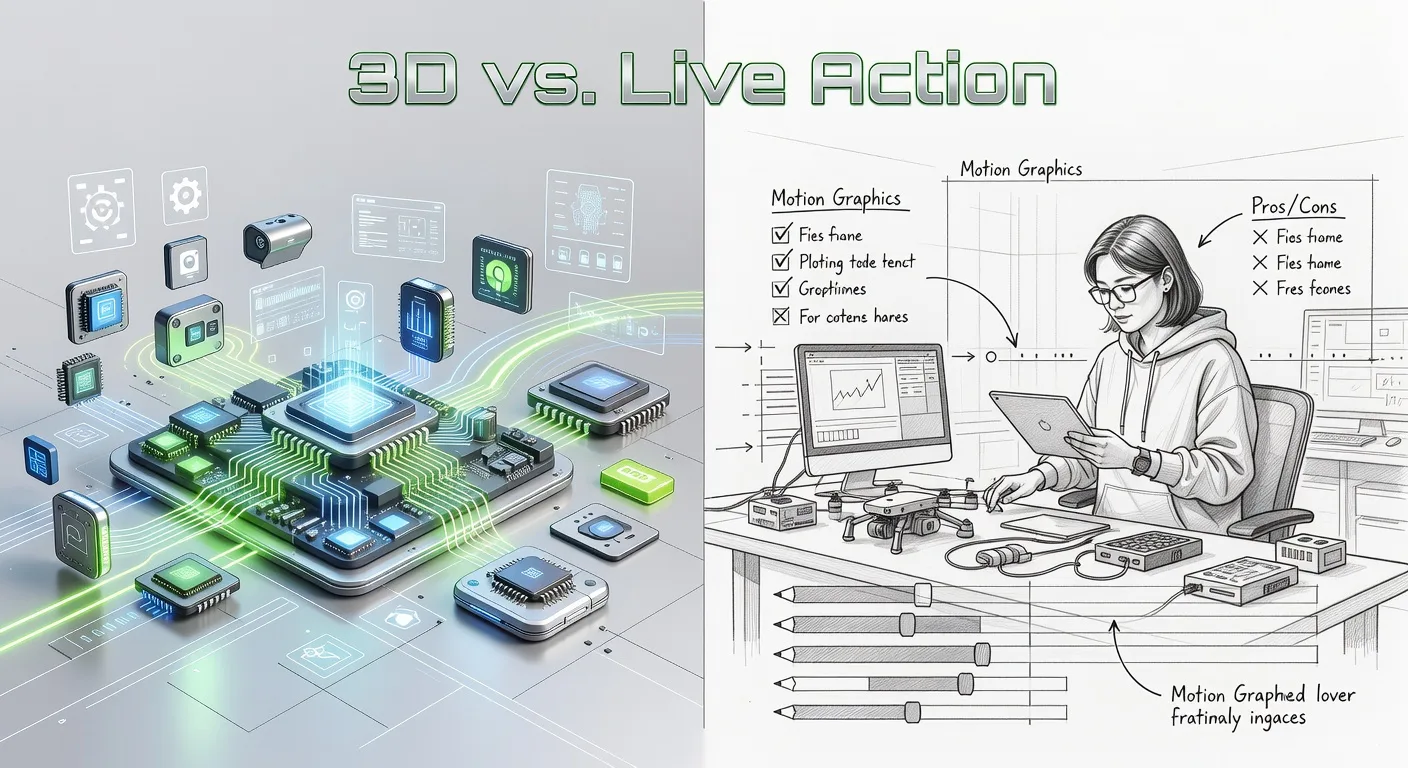
3D explainers are a powerhouse for visualizing the abstract. Imagine trying to show how a quantum processor works or how data flows through a cloud network. With 3D animation, you can:
- Illustrate processes that are impossible to film
- Zoom in on microscopic or internal components
- Use color, motion, and effects to highlight key features
- Create consistent branding with custom visuals
For example, a 3D product animation can reveal the inner workings of a new gadget, while a military 3D explainer can simulate scenarios that would be too risky or expensive to film in real life. 3D explainers are especially effective for SaaS, biotech, and engineering topics where clarity is everything.
Live Action: Human Connection and Real-World Context
Live action videos shine when you want to build trust and show real people using your tech. They’re perfect for:
- Demonstrating physical products in action
- Capturing authentic reactions and testimonials
- Showcasing your team or company culture
- Filming in real-world environments
💡 Looking for professional Video Editing services? Check out our Fiverr gig to get started today!
For instance, a live action demo of a wearable device lets viewers see how it fits, feels, and functions in daily life. Interviews with engineers or users add credibility and relatability. If your tech has a strong human element, live action can make your story more engaging and memorable.
Pros and Cons: 3D Explainers vs. Live Action
Let’s break down the key differences:
3D Explainers
- Pros:
- Visualize the invisible or abstract
- Unlimited creative control
- Consistent branding and style
- Easier to update or localize
- Cons:
- Higher upfront cost for complex scenes
- Requires specialized skills (3D modeling)
- May feel less personal if overused
Live Action
- Pros:
- Builds trust with real faces
- Great for product demos and testimonials
- Faster turnaround for simple shoots
- Authentic, relatable storytelling
- Cons:
- Limited by physical reality and budget
- Harder to show internal or abstract concepts
- Inconsistent lighting or audio can hurt quality
When to Use Each Format: Real-World Scenarios
Choosing between 3D and live action depends on your goals, audience, and subject matter. Here are some scenarios:
- Launching a new app: Use a 3D explainer to visualize the user journey and interface transitions.
- Showcasing a physical prototype: Combine live action for hands-on demos with 3D cutaways for internal features.
- Explaining a scientific process: 3D animation can simplify complex data and make it visually engaging.
- Building brand trust: Live action interviews with your team or customers add authenticity.
Many creators blend both formats for maximum impact. For example, a custom logo animation can open a live action video, or 3D overlays can enhance real-world footage.
Quick Checklist
Before you choose your video style, run through this checklist:
- Define your core message and audience
- Identify if your concept needs visualization beyond reality
- Assess your budget and timeline
- Consider your brand’s visual identity
- Decide if human connection is essential
- Plan for future updates or localization
- Explore hybrid options for added impact
- Consult with a video editing expert for tailored advice
FAQ
Q1: Can I combine 3D animation and live action in one video?
Absolutely! Hybrid videos are popular in 2026, letting you leverage the strengths of both formats for a richer viewer experience.
Q2: Which format is more cost-effective for startups?
It depends on your needs. Simple live action can be budget-friendly, but 3D explainers offer long-term value if you need to update or localize content frequently.
Q3: How do I ensure my tech explainer is engaging?
Focus on storytelling, keep visuals clear, and use professional video editing to maintain pacing and polish.
Q4: What’s the best way to visualize software features?
3D animation excels at showing UI flows, data movement, and abstract processes that are hard to capture on camera.
Q5: Do I need a script for both formats?
Yes! A strong script is essential for clarity and engagement, whether you’re animating or filming live action.
Conclusion
Choosing between 3D explainers and live action isn’t about picking a winner—it’s about matching your message to the medium. For complex tech, 3D animation unlocks new ways to visualize the invisible, while live action builds trust and relatability. Often, the best results come from blending both. Ready to elevate your next tech video? Explore our video editing services or 3D product animation solutions to bring your vision to life in 2026!
Ready to Get Started?
If you're looking for professional Video Editing services, I'm here to help! Visit my Fiverr profile to see my portfolio and place an order.
Turn this workflow into real deliverables
Browse production-ready 3D assets for your next project, then step into 3d modeling if you need a custom build.