AI Content Marketplaces in 2026: A Creator Playbook
Introduction
AI content creation markets are maturing fast in 2026. For creators and brand managers, the upside is real—but so is the noise. This guide cuts through the hype with practical moves anchored in today’s platforms, policies, and budgets.
The 2026 market picture: consolidation meets infrastructure
North America remains the center of high‑value monetization, as the creator economy formalizes into “infrastructure‑as‑a‑service.” Large clouds are bundling compute, storage, security, and analytics so AI services ship as full products, not loose models.
For marketing teams, this means fewer point tools and more all‑in‑one suites tied to measurable outcomes. Subscription fatigue is pushing consolidation, while enterprise buyers reward integrated compliance, model governance, and pipeline observability.
Investment follows the shift. Recent funding concentrated heavily in AI content companies, a signal that workflow optimization is where capital expects returns in 2026.
Where discovery happens now
Discovery is moving to AI agent and model hubs. On Hugging Face, novelty and active community engagement lift visibility; creators who ship updates, link models and datasets, and spark discussion climb faster than silent launches.
Monetization there is mostly indirect: gated content, links to paid services, and community‑driven deal flow. Treat these hubs as storefronts for reputation, not as your only checkout.
Marketplaces to watch
- Prompt marketplaces are expanding at a double‑digit CAGR, with niche plays in legal, healthcare, and education. Opportunity: specialized libraries, prompt governance, and compliance toolkits.
- AI agent directories and Spaces reward iterative shipping. Publish small, document changelogs, and schedule commits to stay on trend pages.
- Stock‑style libraries for AI‑ready assets are resurging. Packs of lighting rigs, node graphs, LUTs, SFX, and parametric 3D bases are easy additions to creator shops.
If you build 3D pipelines, start with reusable geometry. The free 3D model catalog offers base meshes and scenes to accelerate look‑dev and prompt‑conditioning.
Workflows: from plugins to pipelines
Enterprise‑grade GenAI is embedding inside professional tools. In February 2026, Bria.ai expanded across Comfy, Nuke, Houdini, and Photoshop—evidence that compliant, production‑scale models are meeting artists where they work.
In Asia‑Pacific, deployment platforms sit between foundation models and apps, standardizing interfaces and hosting while enabling customization. The takeaway: ship workflows, not demos.
For 3D teams, that means versioned node graphs, secure asset stores, and data‑controlled RAG feeding model prompts. Treat prompts like code: review, test, and document.
Speed rigging and staging using ready‑to‑license meshes from our downloadable 3D bases to keep experiments focused on lighting, texturing, and narrative.
Go‑to‑market playbook for 2026
An LLM alone rarely wins. You need the boring but critical stack—data storage, security, networking, analytics, and increasingly agent orchestration—packaged so brands can deploy quickly without custom ops.
Creators and small studios can mirror this at practical scale. Use proprietary data pipelines for retrieval‑augmented generation, separate public from client data, and pre‑bake compliance into templates and contracts.
- Pick a narrow, valuable job‑to‑be‑done. Define the handoff: input spec, latency target, quality bar, and acceptance tests.
- Bundle assets with the model. Ship a template pack, dataset card, and a demo that shows measurable lift on a realistic task.
- Instrument everything. Use UTM, server‑side events, cohort dashboards, and a changelog that ties releases to performance.
- Offer clear procurement paths. Provide data‑processing terms, model lineage, and a one‑pager on security and regional data residency.
- Be present where buyers look. Maintain a credible Space or model card, a concise site, and proofs of value in case studies.
In North America, deal sizes are higher but vendor checks are stricter; elsewhere, intermediaries lower friction yet compress margins.
Monetization: sell outcomes, not just outputs
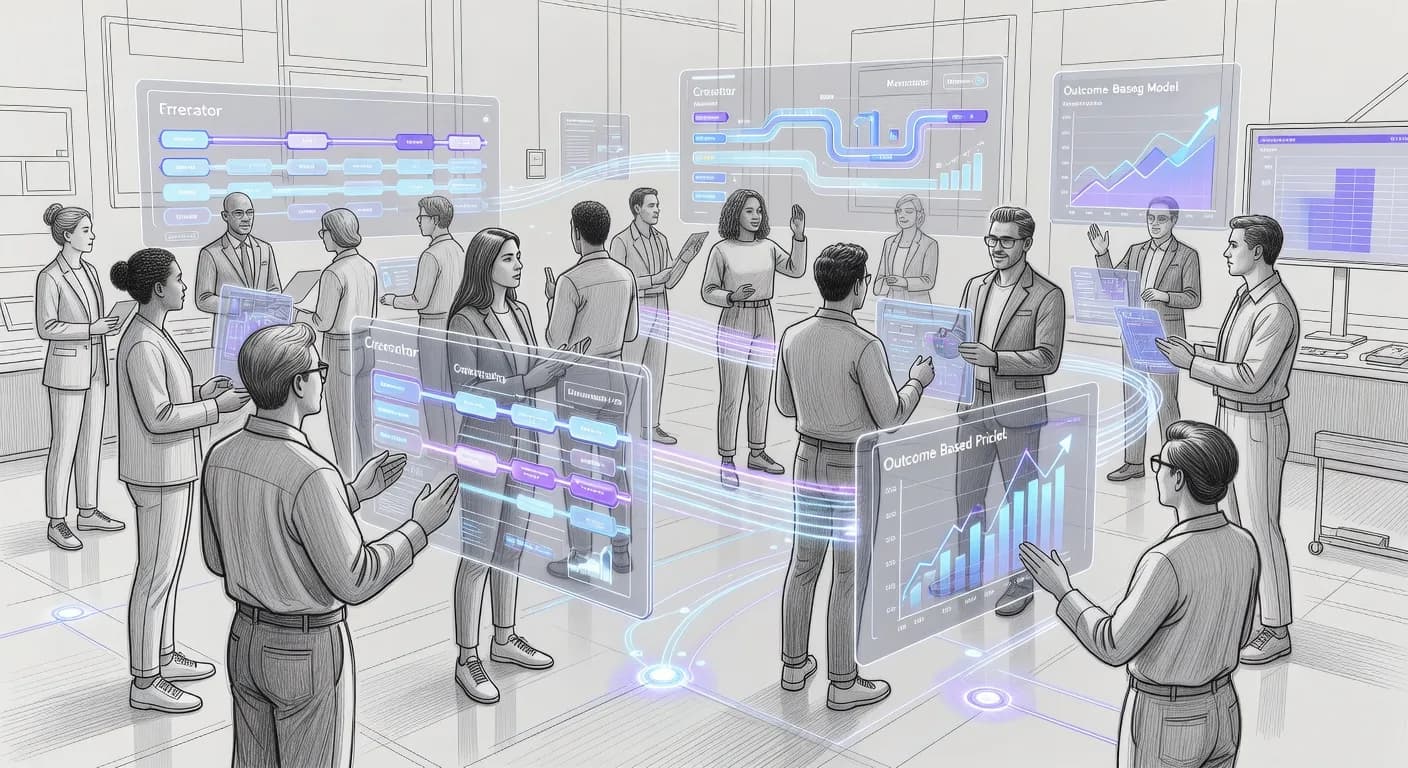
Marketing buyers are reallocating content budgets toward automated creation plus analytics. The shift favors creators who tie deliverables to performance and offer transparent attribution.
Three models stand out in 2026:
- Performance‑based partnerships with clearer tracking across funnels.
- Micro‑licensing of clips, templates, and digital assets.
- Smarter audience segmentation and bundled offers.
There is an execution gap: most organizations have tried GenAI, yet only a fraction report measurable value. Creators who instrument experiments, publish benchmarks, and price by impact close that gap fastest.
Regulation and trust by design
In 2026, European proposals would require detailed training‑data transparency, designate the EUIPO to manage machine‑readable opt‑outs and sector licenses, and even consider flat‑rate remuneration schemes.
Watermarking or digital labels could help creators locate their works inside training corpora, while liability would shift toward non‑transparent providers. UK guidance also highlights divergent transparency practices.
Actionable takeaway: maintain provenance, track licenses, and prefer platforms that itemize sources and support opt‑out registries. Policy is still moving; your workflow should assume audits.
Quick Checklist
- Define a single success metric per campaign (e.g., trials, signups, or ROAS).
- Ship on discovery hubs weekly; post changelogs and roadmap notes.
- Version prompts; log inputs/outputs; review like code.
- Bundle assets and models into clear offers with usage rights.
- Instrument attribution with UTM, pixels, and server‑side events.
- Choose vendors with training‑data transparency and opt‑out support.
- Stage 3D look‑dev with reusable bases from the free catalog.
FAQ
How should creators price AI‑assisted work?
Tie price to business outcomes, not hours. Quote tiers that map to conversion or engagement goals, and include analytics support. Use performance bonuses instead of undercutting base rates.
Are payout rates on AI marketplaces improving?
It depends on the platform and product. Prompt and template stores vary widely, and many hubs emphasize discovery rather than per‑query revenue sharing. Diversify channels and track unit economics.
Can I license AI‑generated content for brands?
Yes, provided your terms grant appropriate usage rights and your inputs are cleared. Maintain records of sources, models, and prompts, and disclose any stock or third‑party assets used.
What about copyright and training data in 2026?
In Europe, proposals would mandate detailed disclosure of copyrighted materials used to train models, with EUIPO managing opt‑outs. 0n 0
Sources
- Content Creation Market | Global Market Analysis Report - 2036
- Artificial Intelligence in Creator Economy Global Market Report 2025-2029 and 2034: Opportunities in Influencer Collaborations, Audience Engagement Analytics, Generative AI Content Production
- Generative AI in Content Creation Market Size to Hit USD 143.09 Billion by 2035
- AI Agent Marketplaces 2026: Discovery and Distribution
- What Creators Need to Know about AI Monetization Models in 2026 - Logie Buzz
- AI Prompt Marketplace Market Share | CAGR 26.9%
- Intellectual Property Report | Thought Leadership | May 2026
- European Parliament Proposes Changes to Copyright Protection in the Age of Generative AI | Global Policy Watch
- Report on Copyright and Artificial Intelligence - GOV.UK
- [PDF] Generative AI: an Assessment of Competitive Dynamics in the Asia ...
- How AI Will Shape Cloud Services And Infrastructure In 2026 - Forbes
- GenAI Trends 2026 Industry Overview and Implications - CRIF.com
Ready to Get Started?
Explore production-ready 3D models for your next project. Browse the 3D model catalog to download assets you can use right away.
Turn this workflow into real deliverables
Browse production-ready 3D models for your next project, then step into 3d modeling if you need a custom build.