Creator Workflows 2026: How Generative AI Cuts Production Time
Introduction
In 2026, the creative landscape is undergoing a radical transformation. For marketing professionals and brand managers, generative AI is no longer a futuristic concept but a practical ally that slashes production time and enhances content quality. This shift is less about replacing human creativity and more about accelerating the process behind it. Let’s explore how generative AI is reshaping creator workflows and what that means for your marketing execution.
The Shift from Manual to AI-Accelerated Processes
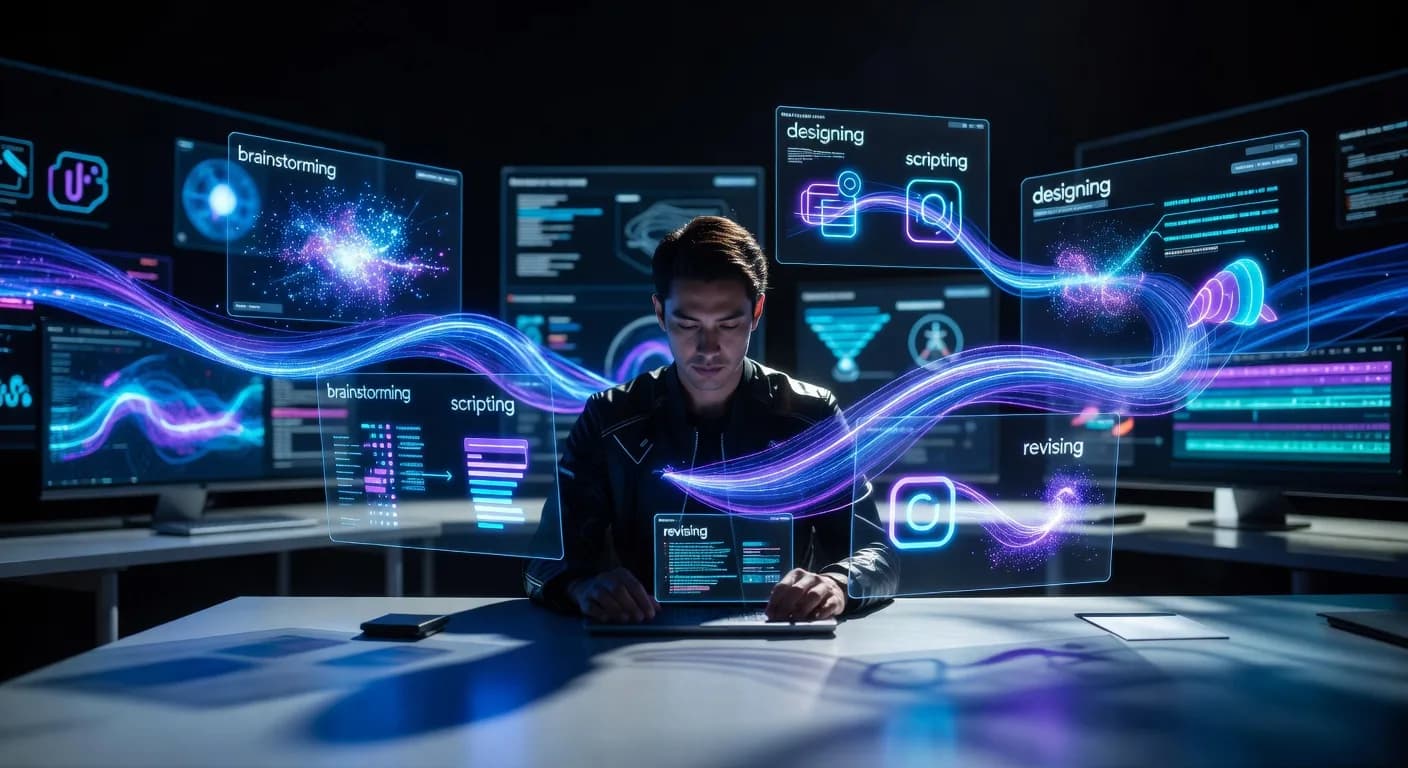
Traditionally, content creation involved multiple manual steps—brainstorming, scripting, designing, and revising. Today, generative AI tools streamline these phases by handling repetitive tasks and generating initial drafts or visual concepts rapidly. For example, media giants like Netflix and Disney have adopted AI to produce concept art and storyboards in hours instead of days, compressing pre-production timelines significantly.
This acceleration is not just about speed but smarter workflows. AI assists with hooks, format adaptation, and distribution, while human teams focus on timing, relevance, and brand resonance. This hybrid approach ensures content remains authentic and engaging while maximizing efficiency.
Building an End-to-End AI Tool Stack
A comprehensive AI-driven workflow in 2026 involves integrating around 30 specialized tools covering copywriting, video scripting, SEO automation, and real-time analytics. Popular tools include ChatGPT for text generation, Sora for video content, and HeyGen for AI-powered voiceover.
Maintaining a prompt library—a curated collection of AI commands—helps creators consistently produce accurate outputs and automate repetitive tasks. Command-line integrations enable AI to interact directly with local files, deepening tool synergy and reducing manual file handling.
However, avoiding tool sprawl is crucial. Selecting a cohesive stack that integrates smoothly prevents inefficiencies and governance challenges, especially for larger teams.
Agentic AI: Autonomous Multi-Step Workflows
Beyond single-response generative AI, agentic AI chains multiple tasks toward a broader goal with minimal human intervention. For instance, an agentic AI system might draft a blog post, generate related images, optimize SEO, and schedule social media distribution autonomously.
This capability dramatically cuts production time and frees marketers to focus on strategic decisions. Yet, human oversight remains essential to ensure content aligns with brand voice and market timing.
Practical Impact: Time and Cost Savings
Case studies show that integrating generative AI can triple writing speed and reduce video production costs by up to $500 per project, thanks to AI voiceovers replacing traditional narration. Storyboard-first AI workflows have doubled first-try success rates for video clips, lowering costs from $5 to $1.50 per finished clip.
Moreover, AI-generated social media posts often outperform manually written ones in engagement tests, highlighting quality gains alongside efficiency.
Generative Engine Optimization (GEO) Best Practices
To maximize AI benefits, marketers adopt generative engine optimization—a set of strategies ensuring AI-generated content is authoritative and trustworthy. This includes:
- Adding clear author credentials and update dates
- Linking to primary sources
- Embedding verifiable facts within content sections
GEO is especially vital for local services and healthcare sectors, where credibility signals influence search engine trust and user engagement.
Quick Checklist for Implementing Generative AI Workflows
- Audit current content production to identify repetitive tasks
- Build a curated AI tool stack with integration capabilities
- Maintain a prompt library for consistent AI outputs
- Implement agentic AI for multi-step automation where feasible
- Apply GEO best practices to enhance content credibility
- Train teams on hybrid workflows balancing AI and human input
- Monitor performance with real-time analytics tools
- Regularly update AI models and tools to maintain accuracy
Frequently Asked Questions
Q1: Will AI replace human creativity in marketing?
No. AI accelerates processes and handles repetitive tasks, but human insight remains crucial for brand alignment and emotional connection.
Q2: How do I avoid overwhelming my team with too many AI tools?
Select tools that integrate well and serve clear purposes. Avoid tool sprawl by focusing on a cohesive stack tailored to your workflows.
Q3: What is agentic AI, and how does it differ from regular generative AI?
Agentic AI autonomously chains multiple tasks toward a goal, reducing human oversight compared to single-step generative AI responses.
Q4: Can AI-generated content negatively impact consumer trust?
Yes, 52% of consumers engage less with content suspected to be AI-generated. Balancing AI use with human authenticity is key.
Q5: Where can I find resources to experiment with 3D assets in my AI workflows?
Explore our free 3D model catalog to integrate high-quality assets into your content production.
Conclusion
Generative AI in 2026 is a powerful catalyst for marketing professionals aiming to cut production time without sacrificing quality. By adopting a thoughtful, hybrid approach that combines AI’s speed with human creativity and oversight, teams can unlock new efficiencies and elevate their content strategies. Start small, build a tailored AI tool stack, and continuously optimize your workflows to stay ahead in the evolving creator economy.
For marketers interested in enhancing visual storytelling, leveraging 3D assets from our free 3D model catalog can complement AI-driven content creation, offering richer, more engaging experiences.
Sources
- Change is coming for creators | 2026 Creator economy will trends
- AI Transformation 2026: 26 Predictions Redefining CX, EX, Design ...
- So What? How to refresh your Generative AI for 2026 - Trust Insights
- FAQ on generative AI: How consumer adoption is steering marketing in 2026
- How to 10x your marketing with AI in 2026 | Lindsay Rosenthal 💫 posted on the topic | LinkedIn
- 25 Generative AI Case Studies [In Depth][2026] - DigitalDefynd Education
- AI Content Creation Statistics 2026: Adoption Rates, Time Savings & Quality Perception - AutoFaceless Blog
- OECD ARTIFICIAL INTELLIGENCE PAPERS June 2025 No. 39 THE EFFECTS OF
- Recap: The Best AI Video Creation Trends from 2025 (And What's Next for 2026)
- The 2026 AI Video Production Playbook | Data Science Collective
- Best Generative Engine Optimization Tools for AI in 2026
Ready to Get Started?
Explore production-ready 3D models for your next project. Browse the 3D model catalog to download assets you can use right away.
Turn this workflow into real deliverables
Browse production-ready 3D models for your next project, then step into 3d product animation if you need a custom build.