6 AI-Driven Shifts in Motion Design for 2026's Creator Economy
Introduction
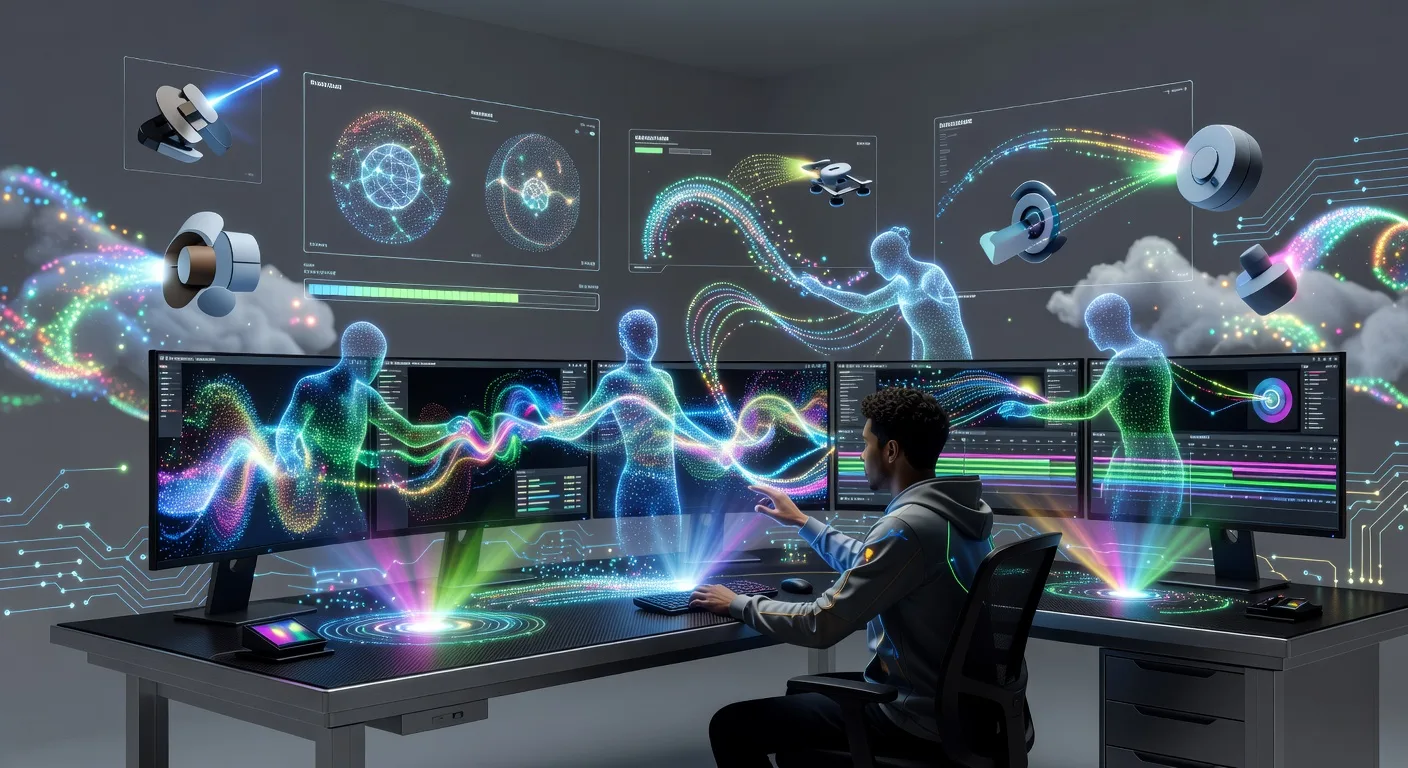
The creator economy is undergoing a profound transformation in 2026, driven by artificial intelligence that revolutionizes motion design. Brands and creators now harness AI to craft dynamic visuals faster, blending human ingenuity with machine efficiency. This shift empowers professionals to innovate beyond traditional boundaries, turning ideas into immersive experiences at unprecedented speeds.
AI-Powered Workflow Automation
AI tools streamline motion design pipelines, automating repetitive tasks like keyframing and rendering. Creators integrate plugins that predict motion paths, reducing manual effort by up to 50%. For instance, a brand manager animating a product launch can use AI to simulate realistic physics, ensuring lifelike interactions without extensive coding.
This automation frees designers to focus on strategic storytelling. In ecommerce visualization, AI-driven workflows generate personalized animations based on user data, enhancing engagement.
Enhanced 3D Rendering and Real-Time Previews
Advancements in AI accelerate 3D rendering, delivering high-fidelity outputs in minutes. Software updates incorporate neural networks for instant previews, allowing iterative refinements on the fly. A creator building a virtual showroom can tweak lighting and textures in real-time, cutting production time for 3D product animation.
These tools democratize complex 3D pipelines, enabling smaller teams to compete with studios. In marketing, real-time previews support agile campaigns, adapting visuals to audience feedback instantly.
Generative AI for Creative Ideation
💡 Looking for professional 3D Product Animation services? Check out our Fiverr gig to get started today!
Generative AI sparks innovation by producing concept variations from simple prompts. Designers input themes, and AI generates diverse motion sequences, fostering originality. For example, a brand manager conceptualizing a logo reveal might use AI to explore hundreds of styles, selecting the most impactful for custom logo animation.
This approach accelerates ideation in the creator economy, where rapid prototyping meets market demands. It also integrates with 3D modeling, creating assets that blend realism with artistic flair.
Integration with Multi-Modal Content
AI enables seamless fusion of motion design with text, audio, and video, creating holistic experiences. Plugins analyze content types to synchronize elements automatically, like matching animations to voiceovers. In explainers for military tech, AI workflows ensure military 3D explainer videos convey complex narratives cohesively.
This multi-modal shift supports modern marketing, where integrated content boosts retention. Creators leverage AI to personalize experiences, tailoring animations to user preferences.
Ethical AI and Bias Mitigation
As AI permeates motion design, ethical considerations rise. Tools now include bias detection algorithms, ensuring inclusive representations. Creators audit outputs for fairness, avoiding stereotypes in animations. This practice builds trust in the creator economy, where authentic content drives brand loyalty.
In workflows, AI assists in diverse asset creation, promoting equitable storytelling. For instance, updating software to mitigate biases enhances global appeal in 3D modeling projects.
Predictive Analytics for Performance
AI analyzes motion design performance, predicting viewer engagement through data insights. Creators optimize animations based on heatmaps and metrics, refining elements for maximum impact. A marketing professional tracking campaign success can adjust visuals using predictive models, improving ROI.
This data-driven approach transforms strategy, aligning with ecommerce trends. In website landing page development, AI predicts user interactions to guide animated elements.
Checklist: Preparing for AI Shifts in Motion Design
- Assess current software for AI integration compatibility.
- Train teams on ethical AI usage and bias checks.
- Experiment with generative tools for ideation sessions.
- Implement real-time preview workflows in projects.
- Analyze performance data to refine animations.
- Explore multi-modal plugins for content synergy.
- Update 3D pipelines with automation features.
Frequently Asked Questions
What are the key benefits of AI in motion design?
AI reduces production time, enhances creativity, and enables personalized content, allowing creators to deliver high-quality work efficiently.
How can brands adopt AI without losing creative control?
Start with hybrid workflows where AI assists in tasks like rendering, while humans oversee storytelling and final edits for authenticity.
What challenges arise with AI-driven changes?
Potential issues include data privacy concerns and skill gaps; address them through training and ethical guidelines.
Are there tools for small creators in the creator economy?
Yes, affordable plugins and open-source AI software make advanced motion design accessible, leveling the playing field.
How does AI impact job roles in motion design?
It shifts focus to strategic roles, with AI handling routine tasks, enabling designers to innovate and collaborate more.
Conclusion
Embracing AI-driven changes in motion design positions brands at the forefront of the creator economy in 2026. By integrating these innovations, professionals unlock new efficiencies and creative depths. Ready to transform your motion design? Contact us for expert guidance on video editing and beyond.
(Word count: 900)
Ready to Get Started?
If you're looking for professional 3D Product Animation services, I'm here to help! Visit my Fiverr profile to see my portfolio and place an order.
Turn this workflow into real deliverables
Browse production-ready 3D assets for your next project, then step into 3d modeling if you need a custom build.